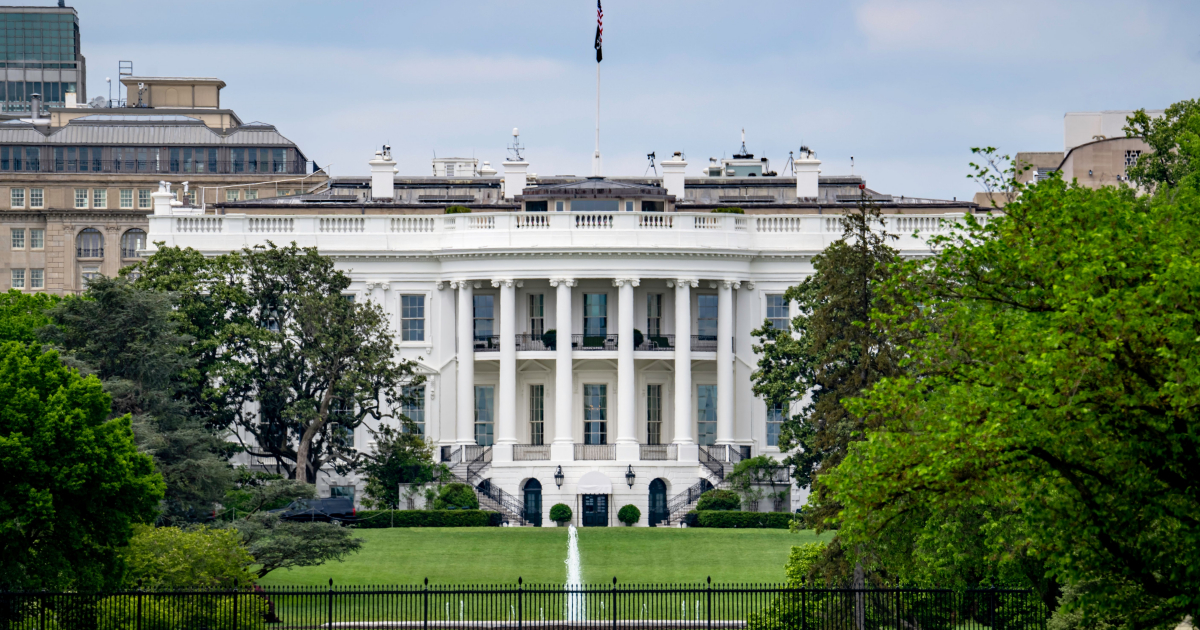
The Flaws of the United States President
The President’s Role
Article 2 of the United States’ constitution declares: “The executive Power shall be vested in a President of the United States of America.”1 In essence, the president’s role is to execute the will of Congress, the legislative branch of the government. The constitution also provides the president with control of the military: “The President shall be Commander in Chief of the Army and Navy of the United States, and of the Militia of the several States, when called into the actual Service of the United States…”Ibid. This seems reasonable on paper as the president’s role is to carry out the wishes of Congress and the constitution provides the president with executive powers in order to perform these duties.
Unfortunately there’s a fatal flaw in this simplistic design because it automatically assumes the president wants to carry out the wishes of Congress and won’t act on his own accord to abuse his powers. This separation between the executive and legislative branches of government was likely a reflection of the problem in Parliament that combined both branches. It seems rather naive by the founders of the United States whom wrote the constitution to believe that every subsequent man would share their Enlightenment values. In their minds, the president was a noble position for the good of the people and the choice of an individual as the form of executive power was to promote personal responsibility and expedience in decision-making. On the topic of the president controlling the military, Alexander Hamilton wrote in Federalist No. 69: “It would amount to nothing more than the supreme command and direction of the military and naval forces, as first General and admiral of the Confederacy; while that of the British king extends to the DECLARING of war and to the RAISING and REGULATING of fleets and armies, all which, by the Constitution under consideration, would appertain to the legislature.”2 (Upper case words are written that way in the source.)
Hamilton effectively described the president as a general or admiral directing the military on behalf of Congress and once again there’s a major weakness that can be identified. Hamilton assumed that Congress would first debate and vote on declaring war against a foreign nation, then the president would direct the military to serve the nation’s wishes. In reality, there’s nothing to stop the president initiating military action independently of Congress; repeated examples of which can be seen over the last century and to this day.
Similarly in Federalist No. 70, Hamilton explained at length that executive power must rest in the hands of one man: “That unity is conducive to energy will not be disputed. Decision, activity, secrecy, and despatch will generally characterize the proceedings of one man in a much more eminent degree than the proceedings of any greater number; and in proportion as the number is increased, these qualities will be diminished.”Ibid. This makes sense from the perspective of efficiency and effectiveness, especially for matters of national importance of which is the president’s raison d'être. Of course, the quality of outcomes hinges entirely on the quality of the president and his character.
The Founding Fathers seemingly envisioned a nation of ideal men that would sacrifice their personal interests in favour of the people’s will, defined as votes by Congress. Tapeinocracy by its very namesake embraces humility, thus it accepts the reality of human nature as opposed to the wistful naïveté displayed by the United States’ chosen system. The overwhelming majority of people can’t survive the crucible of handling power, ergo political systems shouldn’t have centralised power or key figures. In a tapeinocracy there isn’t a president or similar role.
One can examine two extremes of the concentration of political power on a spectrum between autocracy and bureaucracy. Autocracy is the complete concentration of power in one man while bureaucracy is the utter dilution of power away from men into faceless systems; neither system works well in reality. Tapeinocracy takes a different approach of inversely scaling the concentration of power in proportion to the scope of a given topic. Local issues are quickly considered and decided by a few politicians whereas major national issues are deliberated by many politicians across the country.
Contrast Between the 1st and 47th Presidents
It would be interesting to compare the first president with the current incumbent to see how the role has changed or what impact the man has on the outcomes, alongside changes to the political system itself.
George Washington was the first president and took the role with great reluctance. His inaugural speech consists entirely of self-deprecation about his own ability to be president but simultaneously that he considers it to be his duty as demanded by the people. Indeed, he began: “Among the vicissitudes incident to life no event could have filled me with greater anxieties than that of which the notification was transmitted by your order, and received on the 14th day of the present month.”3 More importantly, Washington clearly states his belief that the constitution and serving the country as a whole is paramount, rather than being a prominent figure himself: “By the article establishing the executive department it is made the duty of the President "to recommend to your consideration such measures as he shall judge necessary and expedient." The circumstances under which I now meet you will acquit me from entering into that subject further than to refer to the great constitutional charter under which you are assembled, and which, in defining your powers, designates the objects to which your attention is to be given.”Ibid.
Over two centuries later, Donald Trump is the 47th president and his inaugural speech reflected a vastly different character. It begins with emotional rhetoric then quickly shifts to listing political policies on immigration and public services: “We have a government that has given unlimited funding to the defense of foreign borders but refuses to defend American borders or, more importantly, its own people. … We have a public health system that does not deliver in times of disaster, yet more money is spent on it than any country anywhere in the world.”4 Perhaps more noticeable is the difference between the descriptions that both presidents gave of themselves, as Washington saw himself as a mild facilitator of Congress whereas Trump placed himself front and centre: “Today, I will sign a series of historic executive orders. With these actions, we will begin the complete restoration of America and the revolution of common sense. It’s all about common sense. … Many people thought it was impossible for me to stage such a historic political comeback. But as you see today, here I am. The American people have spoken.”Ibid.
Herein lies the fundamental flaw of centralised power and Hamilton’s misguided belief in the role of a president as the executive branch of government. The position is occupied by a single man, meaning that the fate of the United States can be wildly influenced by the quality of that sole individual.
The Way Forwards
The United States currently has a population of nearly 343 million citizens,5 which places an unfathomable burden of responsibility on the shoulders of the president, more so than anyone can hope to bear. The idea of a single leader running a country doesn’t hold up at all, especially for a country with a substantial population and landmass. Countries persist, while individual citizens come and go, so consistency and wisdom is paramount for long-term prosperity; this simply can’t be guaranteed by a system of popularity-driven voting for one man.
Tapeinocracy operates on a static, well-written and strenuously tested constitution to form the bare structure on which society is based. Politicians are elected by lottery from a pool of voluntary citizens that exceed a minimum standard of intelligence thereby resolving issues of corruption, ideology and stupidity. The process of introducing proposals must always begin with citizens rather than politicians, so the population plays a critical role with maximum involvement, while the constitution and intelligent politicians help to filter good proposals from bad, followed by a majority vote.
The Founding Fathers complained about monarchy and problems caused by power vested in one man, yet when presented with the fantastic opportunity of a blank canvas to design their own political system for a new country, they merely repeated the system that came before them with minimal alterations. A president could potentially rule for life if successfully re-elected as it wasn’t until 1951 that the Twenty-Second Amendment introduced a term limit.6 History shows us time and again that human nature is ultimately responsible for the problems faced, therefore its foibles must be constrained while its admirable traits must be free to flourish; exactly what tapeinocracy provides.
To learn more about tapeinocracy and how it could move humanity forwards towards a brighter future, buy Tapeinocracy: Building a Better Society today.
References
- Constitution Annotated (2026) Constitution of the United States, Article 2.
- Library of Congress (2026) Federalist Papers: Primary Documents in American History, Federalist Nos. 61-70.
- National Archives (2026) President George Washington's First Inaugural Speech (1789).
- The White House (2025) The Inaugural Address.
- United States Census Bureau (2026) U.S. and World Population Clock.
- Constitution Annotated (2026) Twenty-Second Amendment.
Return to the top of the page.